
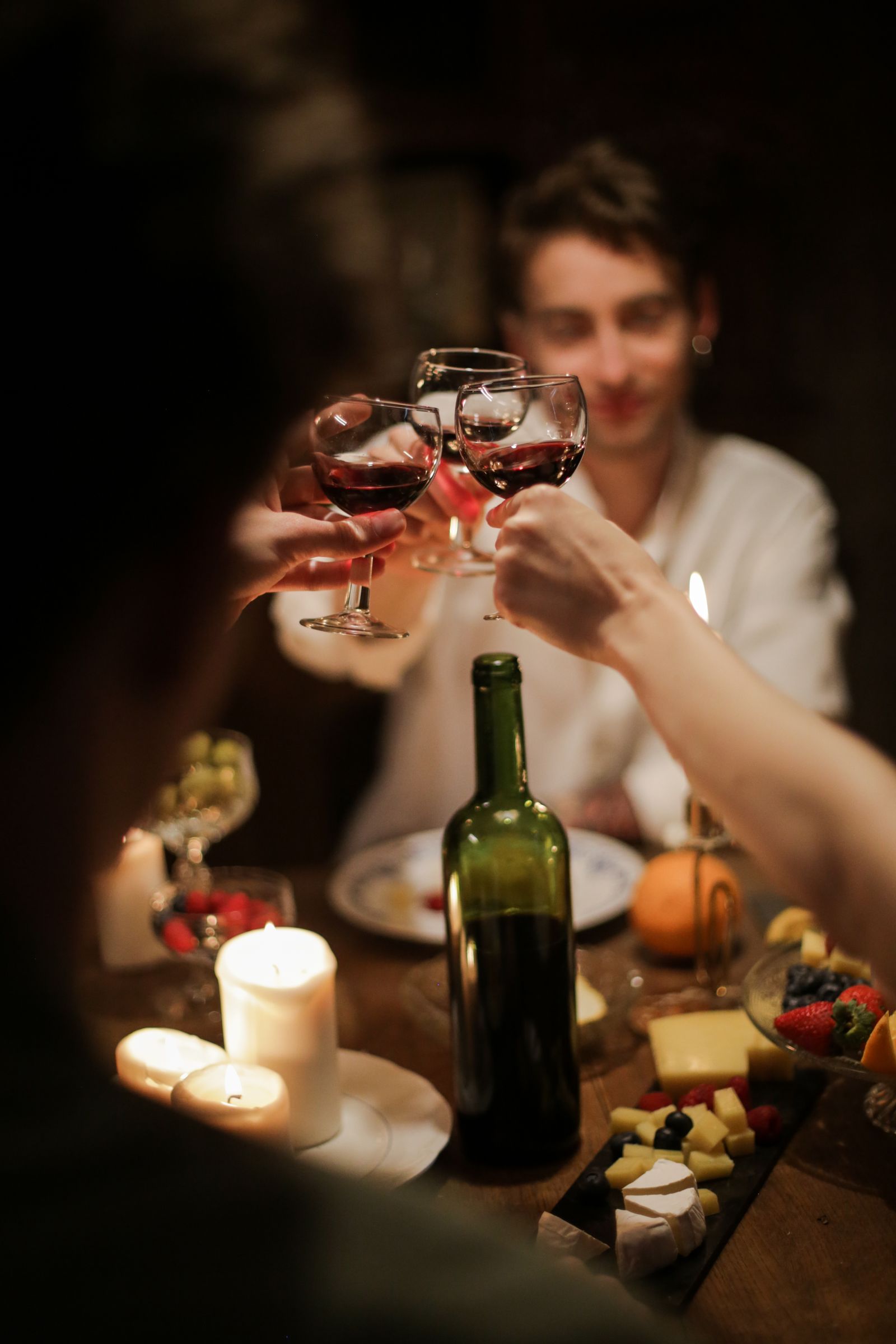
“Luca, you don’t have to play the tough guy. You can — and really should — have a chaser with your vodka.” “But I am.” “What are you drinking with it?” “Wine!”
I probably don’t need to explain what happened when those two drinking cultures collided. Poor Luca was out of action before we had even left his family home.
It was our first dinner in a proper Italian home. I had brought a bottle of Polish Żubrówka as a gift for our host. Luca — a little older than me, a warm, family-minded man and an erudite scholar with a doctorate on the philosophy of Karol Wojtyła — insisted that he would drink “the Polish way” that evening. The next day, Luca’s philosophical reflections had to make way for suffering of a distinctly more earthly kind. As for me, I was more or less unaffected.
That story reminded me how similar we are to Italians around the table, yet how different we can be in the way we drink.
Both we and they love long dinners, family gatherings, conversations that stretch late into the night and alcohol sitting somewhere between the plates. But Italians usually drink differently. Sometimes I get the feeling that the quantities may be similar, but the alcohol content certainly isn’t.
In Italy, wine isn’t treated as a separate “highlight of the evening”. It is part of the meal, the scenery and the daily ritual. Much like Prosecco or Aperol. I remember a restaurant owner we knew, delighted to see us, setting an Aperol Spritz in front of my son, who was fourteen at the time.
“But he’s underage,” I pointed out. “It’s only Aperol,” Maurizio replied, genuinely surprised.
Of course, I’m not saying the Italian model is perfect. Sometimes the line between “part of the meal” and plain old alcohol becomes suspiciously hard to see.
In Poland, on the other hand, alcohol is more often an end in itself. We don’t always drink with dinner. Having a beer without any food is perfectly normal. In Italy, ordering alcohol without anything to eat is met with genuine surprise. Italians sip. We are more likely to “get started”. They spread their drinking over several hours. We can treat it like a competitive sport. The booze runs out = the party’s over.
And that raises a question: which approach makes more sense?
The Italian one — weaker drinks, slowly, with food, but more often?
Or the Polish one — less often, but more intensely, with a strong start and a finish that isn’t always quite as elegant? Or perhaps the problem is neither wine nor vodka, but our constant need to prove that we can “manage one more”?
That evening, Luca couldn’t.